Ditch the PDFs: Why a Coping Skills App Beats Printable Cards
The TherAptAI Team · June 2, 2026 · 5 min read
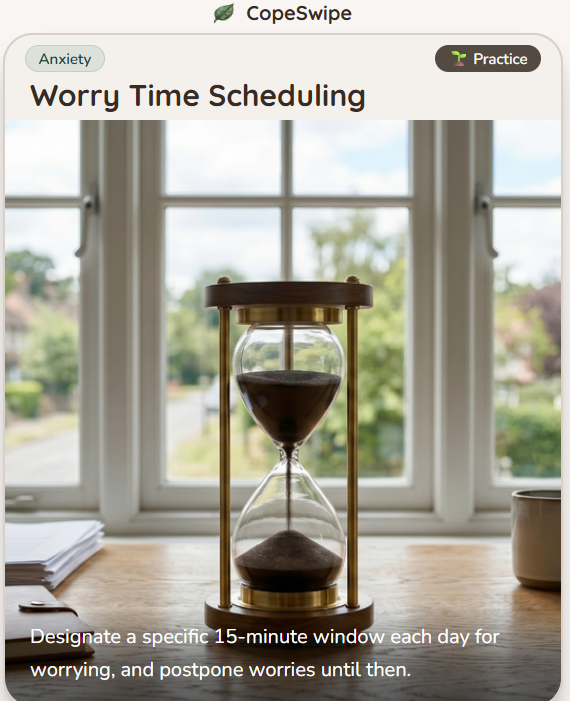
For years, a common clinical response to a client struggling with emotional dysregulation between sessions has been a free printable coping skills PDF. We print it, hand it over, and hope for the best. Yet, when distress peaks, that physical piece of paper is invariably crumpled at the bottom of a backpack, left on a kitchen counter, or completely forgotten exactly when it is needed most.
The mechanisms of change we cultivate in the therapy room rely heavily on generalization—the client's ability to access, remember, and apply learned skills in real-world environments. Relying on analog tools in a digital age fractures that continuity. The therapeutic alliance is built on trust and progress, but when a client returns week after week reporting that they "lost the paper" or "forgot what to do" during a moment of distress, the momentum of treatment stalls. It is time to critically examine why transitioning to digital coping tools is not just a matter of modern convenience, but a clinical and ethical imperative for improving client outcomes.
The Illusion of "Free Printable Coping Cards"
Free printable coping cards often fail because cognitive load increases during emotional dysregulation. When clients experience heightened distress, executive functioning diminishes, making it difficult to locate physical papers. Digital coping tools offer immediate, accessible, and private interventions right when clients need them.
The appeal of the printable coping skills PDF is understandable. It is tangible, easily accessible from an office printer, and provides the clinician with a sense of immediate provision. However, this approach ignores the neurological realities of distress and dysregulation. When a client encounters a trigger, the ensuing amygdala response effectively sidelines the prefrontal cortex. Executive functioning skills—such as planning, organizing, and recalling the location of a specific piece of paper—are severely compromised. Expecting a highly dysregulated individual to search through a purse or a desk drawer for a physical card requires an unrealistic degree of cognitive organization.
Furthermore, physical cards lack contextual adaptability and pose significant privacy risks. A static piece of paper cannot guide a client through a paced breathing exercise, offer interactive grounding techniques, or adapt to the intensity of the moment. They are passive artifacts. More importantly, physical cards can be dropped, lost, or found by individuals outside the therapeutic relationship. For a teenager navigating school or an adult in a high-stress workplace, pulling out a brightly colored piece of paper labeled "Distress Tolerance Skills" can invite unwanted questions and breach their privacy.
In contrast, a smartphone is typically within arm's reach and inherently private. To the outside observer, a client using a digital coping tool simply looks like anyone else checking their phone. Integrating clinical mechanisms of action into a device the client already carries seamlessly bridges the gap between clinical intention and real-world execution.
Bridging the Gap: Continuity of Care Outside the Session
Continuity of care requires interventions that extend beyond the traditional therapy hour. Digital coping skills applications scaffold the client's ability to practice emotional regulation in their natural environment, seamlessly reinforcing the clinical mechanisms of action cultivated during in-person therapeutic sessions.
The core of effective therapy is not merely what happens during the 50-minute clinical hour; it is how the client applies those insights in the remaining 167 hours of the week. This is the essence of skill generalization. If our interventions exist only in the vacuum of the clinic, their efficacy is severely blunted. We cannot be with our clients 24/7 to ensure they stay on the right path. Therefore, we must equip them with tools that function autonomously in our absence.
By transitioning from a coping skills PDF to a dedicated app, practitioners actively support this continuity of care. The app acts as a secure extension of the therapeutic container. When clients utilize digital tools to track triggers, engage in cognitive defusion exercises, or walk through a physiological grounding sequence, they are engaging in active habituation.
State-dependent learning suggests that skills acquired in a calm, regulated state (the therapy office) are difficult to access in a dysregulated state (the real world). Digital tools interrupt this barrier by providing immediate, step-by-step scaffolding exactly when the state shift occurs. Over time, the device itself—often a source of stress or doom-scrolling—can be transformed into a conditioned cue for regulation and mindfulness.
The Ethics of Digital Integration
Ethical integration of digital tools requires a primary focus on client well-being and autonomy. Clinicians must carefully vet apps for data privacy, maintain strict confidentiality, and ensure clients provide informed consent after understanding the specific risks, benefits, and data usage of the technology.
As we integrate digital tools into clinical practice, our ethical frameworks must act as the ultimate filter. Rather than getting distracted by technological novelty, our evaluation of any app or platform must hinge on a single, guiding question: Does this tool tangibly improve the client's welfare and capacity for self-direction? The primary responsibility of the clinician is always to respect the dignity and promote the welfare of the client.
This commitment to client welfare extends directly to the protection of their digital data. Clinicians bear the responsibility of developing and maintaining technological competency, meaning we must actively vet the applications we recommend. We must ensure they meet strict standards for privacy and confidentiality. A coping skills app should serve as a secure clinical scaffold, not a data-mining liability. Before introducing a tool into the therapeutic space, counselors must understand how it stores, transmits, and protects client information to prevent unauthorized access.
Finally, preserving client autonomy requires transparent, informed consent regarding the use of any technology. Clients must be explicitly educated on the specific risks, benefits, and limitations of using a digital coping tool. This includes a clear, legible explanation of what data the app collects, who has access to it, and how it integrates into their broader treatment plan. Giving clients this comprehensive understanding empowers them to make an informed choice about whether to utilize the technology, honoring their freedom of choice and agency throughout the counseling relationship.
Tech as a Scaffold, Not a Substitute
Digital health applications should function as clinical scaffolds that manage structural and administrative tasks. This integration allows practitioners to focus their energy entirely on fostering empathy, therapeutic alliance, and human connection, while technology handles the routine daily reinforcement of coping skills.
A common, albeit misplaced, apprehension among mental health professionals is that technology might flatten the nuance of the therapeutic relationship or inadvertently replace the clinician. It is crucial to position these tools correctly within the treatment hierarchy. An app is not a therapist; it is a clinical scaffold.
Recent literature exploring the integration of advanced technologies and artificial intelligence in mental health emphasizes a partnership model. In this framework, technology provides accuracy, accessibility, and efficiency, while the human professional maintains the fundamental human elements of counseling. A coping skills app manages the repetitive, structural work of skill reinforcement. It prompts the client, provides the step-by-step instructions, and offers a private space for immediate intervention.
This functional offloading frees the clinician from spending valuable session time repeatedly reviewing the basic mechanics of a breathing exercise or a grounding technique. Instead, the session can be devoted to what technology cannot do: processing the client's emotional experience, exploring resistance to using the skills, validating their struggle, and deepening the therapeutic alliance. The future of our field does not view tech and empathy as mutually exclusive; rather, it represents human presence actively augmented by algorithmic and digital insight.
Actionable Clinical Takeaways
Implementing digital coping tools requires strategic integration into treatment plans. Clinicians should introduce apps during sessions, practice the mechanisms of action collaboratively, and establish clear boundaries regarding how the generated data will be reviewed and utilized in future clinical work.
To successfully transition your practice from handing out physical cards to utilizing digital tools, consider the following implementation steps to ensure clinical efficacy and ethical compliance:
- Collaborative Onboarding: Do not simply prescribe the app at the end of a session. Download it with the client during the clinical hour and navigate the interface together. Familiarity breeds utilization.
- In-Session Practice: Safely trigger a mild state of physiological arousal (e.g., through a brief memory recall or imaginal exposure) and use the app's features to return the client to baseline. This demonstrates the tool's efficacy in real-time.
- Mechanism Translation: Explain why the app works. Focus on the underlying mechanisms of action—such as parasympathetic nervous system activation, bilateral stimulation, or cognitive restructuring—rather than just how to push the buttons.
- Establish Data Boundaries: If the app generates utilization data or mood logs, clearly define your boundaries as a clinician. Clarify how and when you will review this information. Ensure clients understand that the app is an independent skill-building tool, not a 24/7 emergency monitoring system tied directly to the therapist.
The CopeSwipe Edge
CopeSwipe transforms static coping strategies into dynamic, accessible digital interventions. By ensuring clients carry their personalized regulation tools anywhere, CopeSwipe enhances practitioner efficacy and empowers clients to navigate distress, bridging the critical gap between clinical sessions and daily life effectively.
The distinction between a physical PDF and a digital tool is the profound difference between passive information and active intervention. CopeSwipe is engineered specifically to bridge the gap between knowing a skill conceptually and using a skill when dysregulated. By placing evidence-based regulation techniques directly in the client's pocket, we remove the cognitive and physical friction of accessibility during moments of high distress.
For the clinician, CopeSwipe acts as the ultimate therapeutic adjunct. It reliably handles the structural reinforcement of coping mechanisms out in the real world. This structural support empowers you to dedicate your clinical hour to what you do best: providing the irreplaceable human touch, deep empathy, and nuanced clinical insight that drive lasting, systemic change. Get started and bring your clients' coping tools into the digital age.
References & Further Reading
- Natwick, J. (2017). Connection and confidentiality in the internet age. Counseling Today. American Counseling Association.
- Rith-Najarian, L. R., et al. (2022). Digital Technologies for Emotion-Regulation Assessment and Intervention: A Conceptual Review. Clinical Psychology Review, National Library of Medicine. https://pmc.ncbi.nlm.nih.gov/articles/PMC8846444/
The TherAptAI Team
Clinicians & Builders
Therapists, designers, and engineers building tools that make evidence-based care easier to practice every day.